




Multi-Sound-Module

More than just a signaller or reversing alarm

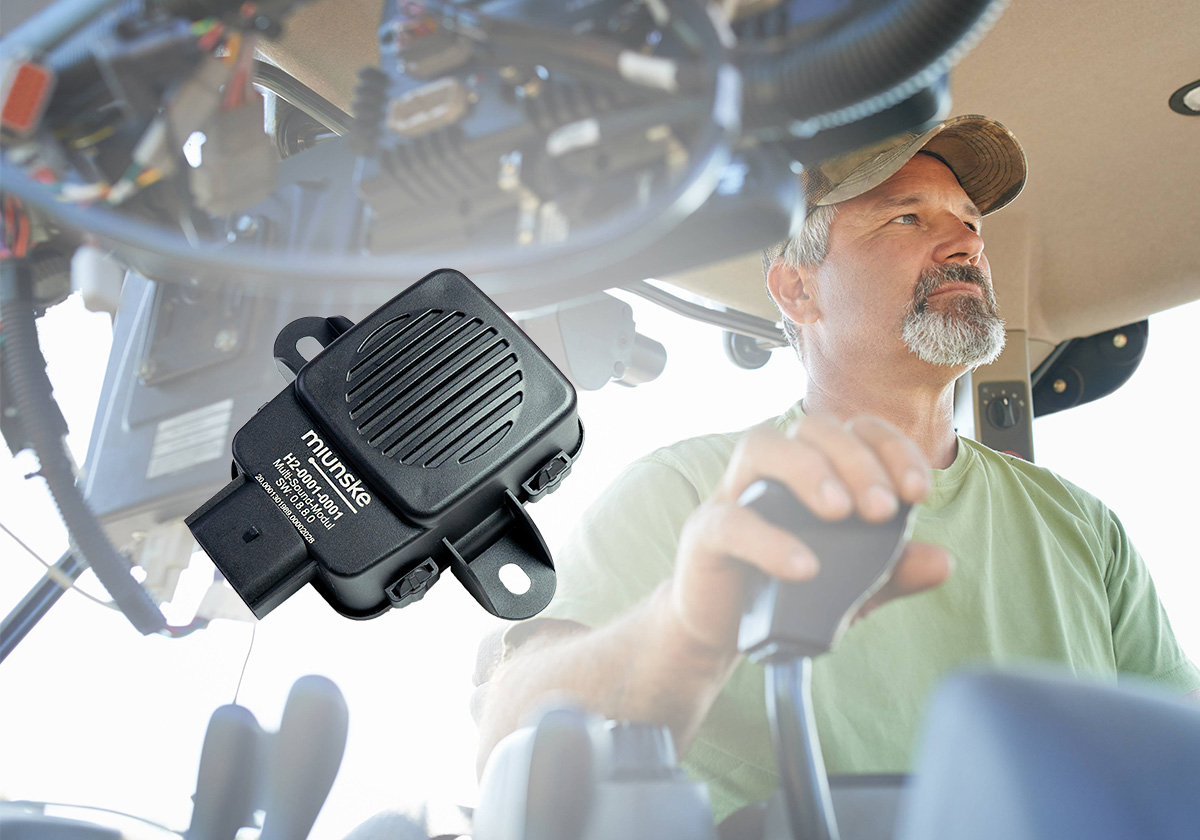
Acoustic communication is playing an increasingly important role in modern commercial and special vehicles. Whether warnings, instructions or individual signal tones – targeted sound reproduction in the vehicle cab contributes significantly to safety and user-friendliness. In this context, the integration of specialized electronic components becomes more and more relevant. The Multi-Sound-Module is a key solution: a powerful module that was specially developed for the situation-dependent replay of acoustic messages such as sounds, melodies and voice messages.
The following information focuses on the technical background, variants, possible applications and advantages of the Multi-Sound-Module and shows how sophisticated acoustic solutions can sustainably improve communication between human and machine.

Why acoustic signals in vehicles becoming more important

Acoustic communication is becoming a central feature of vehicle technology. In addition to visual displays and haptic feedback, targeted sounds and voice prompts have become indispensable, especially in complex, noisy or safety-critical environments such as commercial vehicles, agricultural machinery or municipal emergency vehicles. Whether to warn of hazards, to confirm operating actions or to transmit status-related information – acoustic signals provide clear information, increase the driver’s attention and contribute significantly to operational safety.

The Multi-Sound-Module at a glance

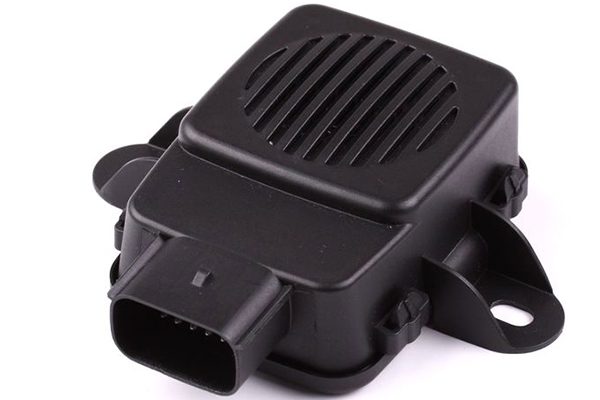
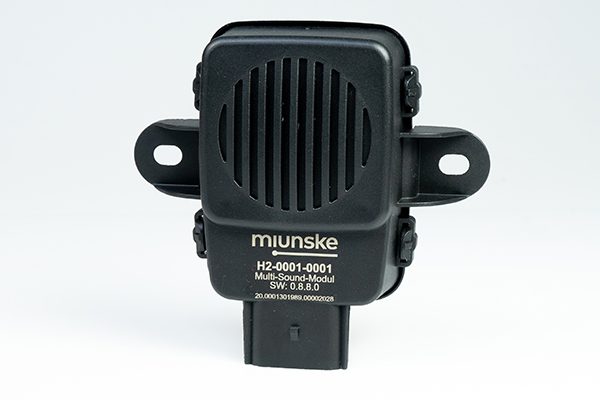
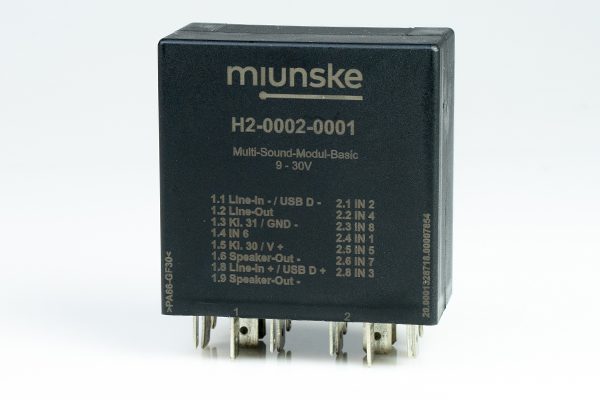
With the Multi-Sound Module, miunske offers a compact, robust and versatile solution for sound reproduction in vehicles and enables the accurate and situation-dependent output of acoustic signals and voice messages. Eight signals can be played from a library of 80 standard sounds at four different volumes. The variant with CAN interface offers far more options. Depending on the model, the sound output is of high quality via an integrated loudspeaker or an externally connectable sounder. Thanks to the CAN interface, the module can be easily integrated into existing vehicle electrical system architectures and controlled flexibly.

The hardware variants of the Multi-Sound-Module

-signals & sounds

  • signal output as tone, noise, melody or voice message – in a wide range of variants

  • sound database with more than 80 standard sounds

  • customised signals can be integrated in WAVE format

  • total running time for all signals: 250 seconds

  • number of repetitions 1 – 255

-8 digital inputs

-input for connecting external sound sources (e. g. radio, MP3 player, smartphone)

volume control in 4 levels

-integration into the vehicle: plug & play with waterproof Molex connector

All relevant information, technical details and features of the Multi-Sound module are summarized in the product sheet. Simply click and start the download.

Even more signal diversity with the Multi-Sound Module with CAN interface

The Multi-Sound Module features six digital inputs in combination with a powerful CAN interface and offers extensive parameterization options. For example, 5 voice messages in 10 languages each. It enables the reproduction of up to 50 different tones– Individually adaptable for a wide range of applications. The volume can be adjusted continuously. In addition, integration into existing CAN networks, for example with J1939 or CANopen, can be realized through customer-specific adaptations. Continuous monitoring of the device status and on-board voltage with output via the CAN bus ensures additional operational safety.

Customized signaling through integrable sound files

A key feature of the Multi-Sound module is its high level of adaptability: Customer-specific audio content – such as voice announcements, warning tones or functional sounds – can be integrated as a WAV file and retrieved via CAN commands. This enables context-sensitive signaling: for example, different warning messages for door statuses, speeding or system errors. This allows a significantly higher information density than with simple beeps and at the same time improved user-friendliness.

Advantages in comparison to conventional warning devices - differentiated signaling

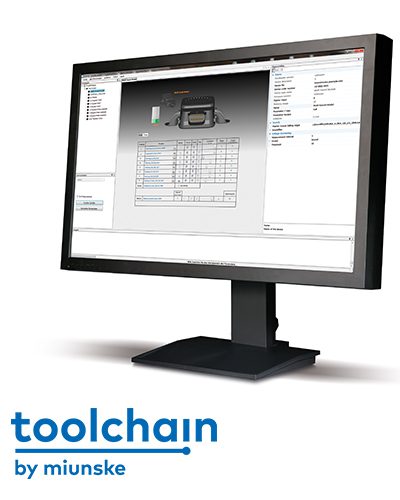
In comparison to conventional piezo signaling devices or simple buzzers, the Multi-Sound Module offers numerous advantages. A key feature is the individual sound design of different signals. This can be designed using the free parameterization interface of the miunske-toolchain and precisely tailored to requirements. Customizable are:

  • type of signal (tone, noise, melody, voice message)

  • signal output as analogue tone (e.g. indicator click-clack)

  • prioritization of the signal (which signal should be heard first if several messages are present in parallel?)

  • volume – per triggering event

  • mute function (muting)

  • number of repetitions and corresponding pause times or endless loop

Integration of the MSM into existing vehicle architectures

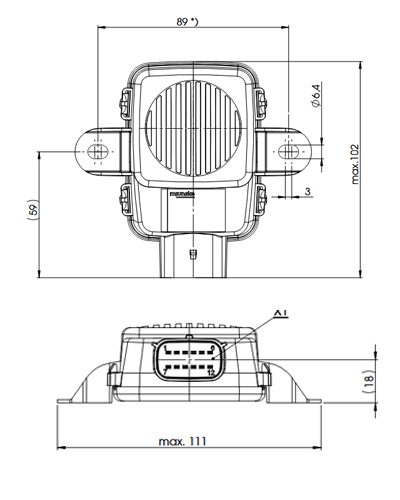
The various versions of the Multi-Sound Module can be easily integrated into a wide range of vehicle types and existing architectures. CAN-capable versions in particular help to ensure trouble-free communication with existing vehicle components and to connect the module in a compatible way. Special advantage: The module can be used in 12V as well as 24V on-board power supply systems. Thanks to its compact design, it can be flexibly positioned even where installation space is limited, whether on the dashboard or on the roof lining. To ensure smooth system integration, miunske supports its customers with comprehensive technical support and assists with CAN integration. In this way, any application, whether standard or special variant, can be realized.

Application possibilities of the Sound-Module in commercial & special vehicles

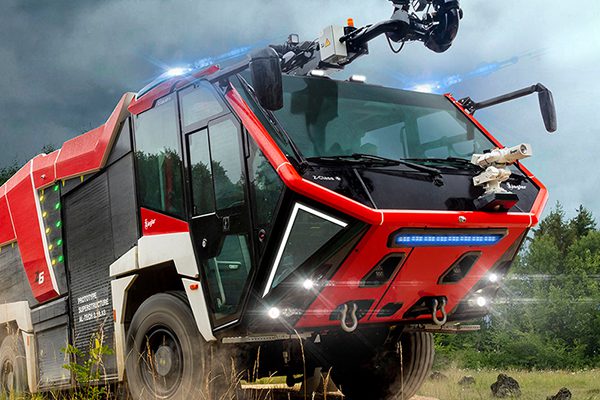
The Multi-Sound Module can be used for a wide range of applications: In municipal vehicles, it warns of an open tailgate or activates a reversing signal. I In agricultural machinery, it provides information about hydraulic functions or machine status. In buses and vans, it can provide acoustic information for the passenger or driver– for example when the door is open, the system fails or the ramp control is activated. In rescue and fire-fighting vehicles, for example, clearly understandable, situation-dependent sound reproduction is of great importance and helps emergency services to react quickly and reliably, even in an emergency.

WARNING MESSAGES WITH THE MULTI-SOUND-MODULE

increase the safety of mining machinery

MORE OPERATIONAL SAFETY WITH THE MULTI-SOUND-MODULE

through voice messages in airfield firefighting vehicles

News

Multi-Sound-Module AVAS

Vehicle sounds for hybrid and electric vehicles The streetscape is changing more and more. An increasing number of hybrid and electric vehicles are participating in

Weiterlesen »