


On-Board Chargers (OBC) for Hybrid and Electric Vehicles
High-performance and reliable On-Board Chargers for fast and efficient EV charging
On-board chargers (OBCs) are responsible for converting alternating current (AC) from the power grid into direct current (DC) required to charge the vehicle’s traction battery. In modern electric and hybrid vehicles, however, they are far more than simple AC/DC converters. Today, OBCs are strategic vehicle components that play a critical role in the overall vehicle architecture. They influence not only the charging capability of the vehicle, but also its overall performance and efficiency.
The MTA On-Board Chargers are essential vehicle components for electric and hybrid vehicles, designed to support increasing charging power. On-board chargers specifically developed for high-voltage systems are also suitable for 800V vehicle architectures, aligning with the trends in heavy-duty vehicle development. In this article, we introduce the on-board chargers from MTA S.p.A. and highlight their technical strengths in practical applications.
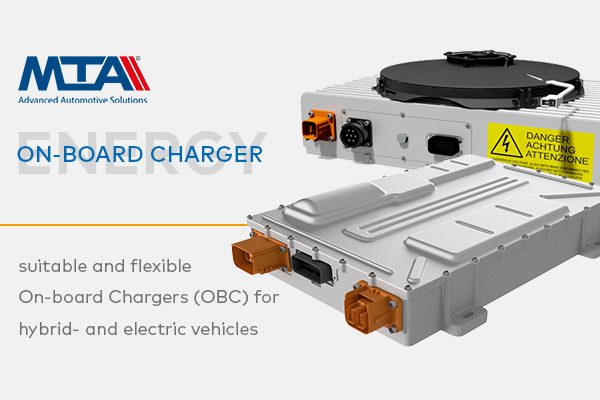
MTA On-Board Charger at a glance
Different charger series designed to match the vehicle architecture
The On-board Chargers (OBCs) developed by MTA are specifically designed for trucks, buses, agricultural machinery, and marine applications, as these differ significantly from the requirements of traditional passenger vehicles.
Based on their technical characteristics, MTA OBCs provide particular value in scenarios where AC charging predominates and widespread DC fast-charging infrastructure is not available.
In particular, the high efficiency and power density have a positive impact on the vehicle’s range, efficiency, packaging space, weight, and overall system cost. The specification is a key lever in this regard.
MTA On-board Charger – in the miunske Portfolio
As an MTA distributor and system supplier for vehicle electronics, miunske offers various charger series in its portfolio with a view toward the development of electric and hybrid vehicles. The range includes the BHP, HPC, and Evo series, which are distinguished by robust design, high levels of integration, and compatibility with international power grids.
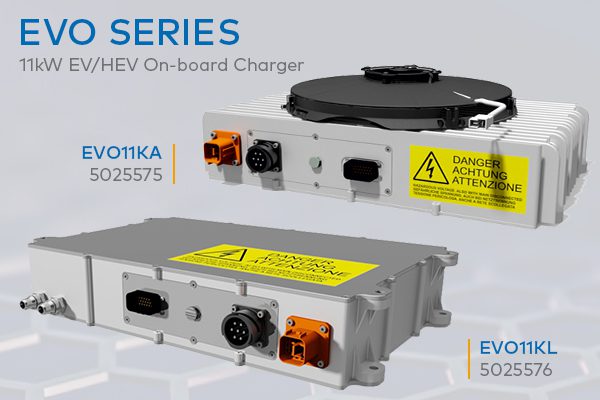
EVO series
- efficient charging system, available in an 11kW version
- compatible with international power grids
- air- or liquid-cooled
- supports single-phase or 3-phase charging
- highly efficient >90%
- robust design, IP 67, IP6K9K
- CAN 2.0B controlled
HPC series
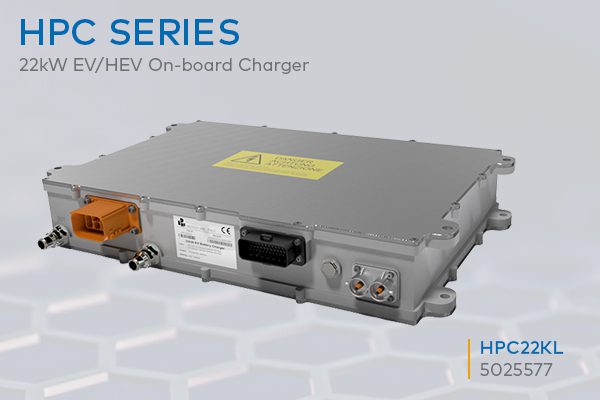
- OBC models with advanced SIC converter technology for high power density
- supports DC charging chains up to 840 V DC Link
- robust galvanic isolation
- liquid-cooled
- >94% efficiency
- CAN 2.0B controlled
- protection class IP67, IP6K9K
BHP series
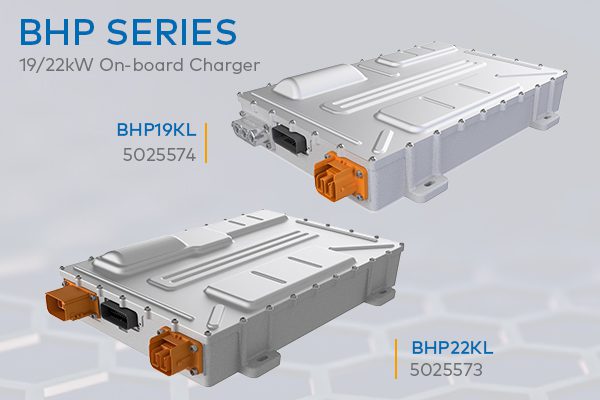
- high-performance modules with 19.2 kW (NAFTA) or 22 kW (EUROPE) charging power
- 1-phase/1- & 3-phase charging
- bidirectional, for V2G, V2L applications
- liquid-cooled
- >94% efficiency
- CAN2.0B controlled
- protection class IP67, PK6K9K
An overview of the On-board Chargers from MTA S.p.A., including technical details, is available in the charger product overview.
Strengths of MTA On-board Chargers in practice
Application in the vehicle
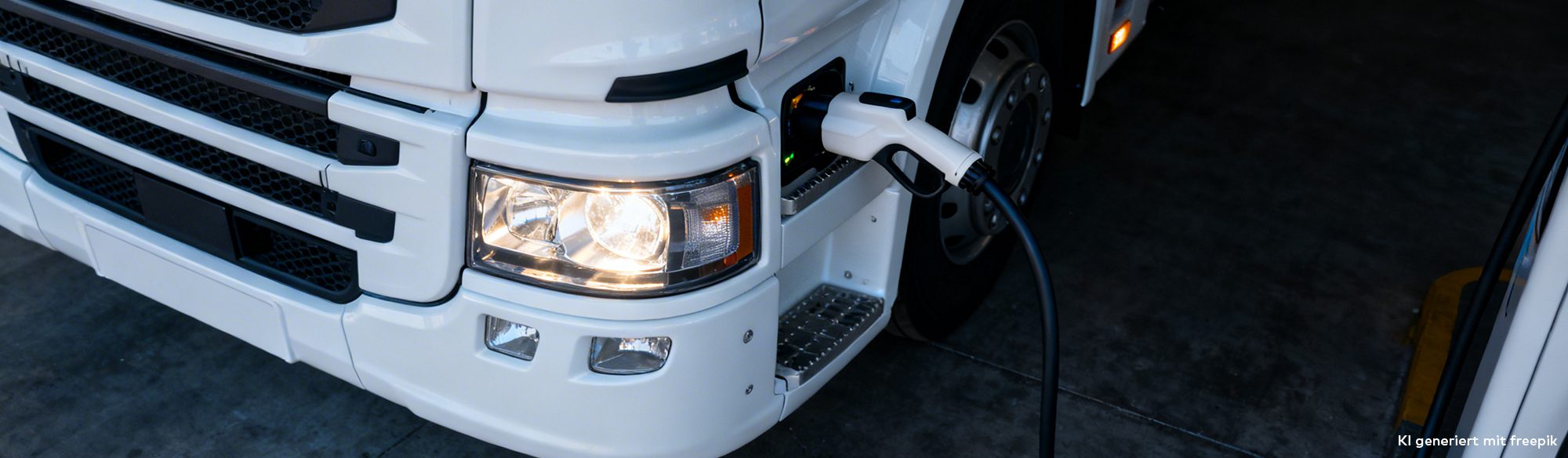
MTA OBCs are designed for full integration into the vehicle. Their form, dimensions, and robustness are specifically tailored to the requirements of mobile work machines and heavy-duty vehicles, which demand highly reliable solutions under harsh conditions and with large battery packs. In the vehicle, the OBC is typically installed near the charging port to minimize cable lengths and efficiency losses.
Vehicles with very high-capacity battery packs can experience significant charging times before the battery reaches a full charge. For this reason, MTA has developed its OBC with a modular and parallelizable architecture, enabling shorter charging times through the combination of multiple OBC units.
The chargers’ broad AC compatibility (US/EU, single- and three-phase) allows charging at a wide variety of locations and operating environments. Compliance with standards ensures that the OBC harmonizes with common grid connections and international vehicle regulations.
Thanks to CAN bus control, charging processes can be precisely regulated, monitored, and optimally aligned for performance.
Application outside the vehicle
In addition to vehicle configurations, MTA also develops OBCs for off-vehicle applications, such as mobile chargers (high-capacity portable batteries). These solutions are particularly common in North American agriculture, where the distances between fields and farms make it impractical to charge the vehicle at a fixed location. The mobile charger enables on-site charging in the field, thereby reducing downtime and unproductive return trips. This concept is similar to a mobile fueling station—but in a fully electric version.
Bidirectional charging applications – future-proof energy management strategies
A key feature of the new MTA BHP series is bidirectionality, a function that is increasingly in demand. In addition to traditional charging (Forward Charge Mode), the OBC supports feeding energy back into the grid or supplying external loads. This capability opens up potential applications for:
- V2L (Vehicle to Load): Supplying external consumers, for example, agricultural equipment. This is the most widely used and practical solution in real-world environments such as construction sites and farmland.
- V2G (Vehicle to Grid): Returning excess energy stored in the battery to the power grid. In practice, the electric vehicle functions as a “virtual power plant,” helping to stabilize the grid during peak periods. While V2G is already regulated, it is not yet widely adopted. Achieving true energy balancing in the grid, where every vehicle becomes an active energy node, requires a more advanced infrastructure.

Application in 800V Vehicle Architectures
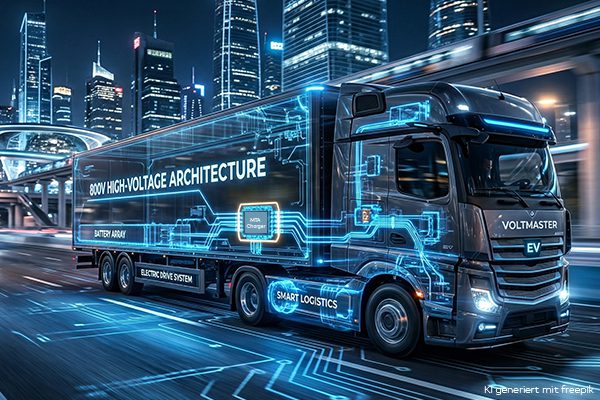
The electric vehicle architecture is currently undergoing a rapid transition from 400V systems to 800V architectures. MTA has addressed this trend by developing OBCs that are compatible with high-voltage systems. OEMs are increasingly opting for 800V because it:
- reduces the current circulating within the vehicle
- enables lighter and thinner wiring
- improves the overall efficiency of the electrical system
The right On-board Charger delivered by miunske
On-Board Chargers from MTA S.p.A can, when properly selected and implemented, be a key component in vehicle planning and the strategic development of vehicle concepts. Customers can find OBCs from MTA’s various series, along with detailed datasheets in charging technology section of the miunske online catalog. Further information is available to vehicle developers through the miunske sales team, working in close cooperation with the manufacturer and supplier, MTA.